
Marketing automation promises something every growing business wants: more results with less manual work. The idea is appealing. Build a system once, let it run in the background, and watch leads move through your sales funnel while your team focuses on higher-value tasks.
The reality is often more complicated. Choosing the wrong automation platform can create fragmented workflows, frustrating limitations, unnecessary expenses, and months of migration headaches. That is why comparisons between HubSpot and ActiveCampaign continue to dominate conversations among marketers, agencies, startups, and business owners.
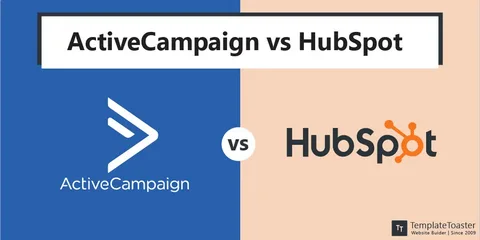
Both platforms have earned strong reputations in the marketing world. Both offer email marketing, automation capabilities, CRM functionality, lead nurturing tools, and customer journey management. Yet they approach marketing automation from very different angles. One positions itself as an all-in-one growth platform. The other focuses heavily on sophisticated automation and customer engagement at a more accessible price point.
The challenge is not determining which platform is better in general. The challenge is identifying which platform is better for your business. A startup with a small marketing team may have very different requirements than a rapidly scaling SaaS company or a digital agency managing dozens of clients.
This review takes a practical look at both platforms, examining where they excel, where they fall short, and which types of organizations are most likely to benefit from each solution.
Understanding the Core Difference Between HubSpot and ActiveCampaign
Many comparisons begin by listing features, but the more important distinction lies in philosophy.
HubSpot was designed to function as a complete business growth ecosystem. Marketing, sales, customer service, content management, operations, and CRM capabilities all exist under one umbrella. The platform aims to become the central hub for customer acquisition and relationship management.
ActiveCampaign, in contrast, built its reputation around email marketing and automation. While it has expanded significantly over the years, its primary strength remains creating highly personalized customer journeys through sophisticated automation workflows.
This difference influences nearly every aspect of the user experience.
Platform Philosophy Comparison
| Category | HubSpot | ActiveCampaign |
| Core Identity | Growth Platform | Automation Platform |
| Primary Strength | All-in-one ecosystem | Advanced automation |
| CRM Focus | Very Strong | Strong |
| Email Marketing | Excellent | Excellent |
| Ease of Scaling | Excellent | Very Good |
| Operational Scope | Broad | Focused |
Businesses looking for a complete operational ecosystem often gravitate toward HubSpot. Businesses prioritizing automation sophistication frequently prefer ActiveCampaign.
“HubSpot tries to manage your entire customer journey. ActiveCampaign focuses on optimizing every interaction within that journey.”
First Impressions and Ease of Use
The best marketing software in the world becomes useless if teams struggle to use it effectively.
User experience plays a major role in adoption, productivity, and long-term satisfaction. Both platforms offer polished interfaces, but they create very different first impressions.
HubSpot feels approachable almost immediately. Navigation is logical, dashboards are clean, and features are organized in a way that makes sense even for relatively inexperienced users. This simplicity has become one of HubSpot’s biggest advantages.
ActiveCampaign provides a powerful environment, but the learning curve can feel steeper. New users often need more time to understand how different features connect together, especially when building complex automation sequences.
HubSpot User Experience Strengths
- Clean interface
- Intuitive navigation
- Beginner-friendly design
- Excellent onboarding
- Consistent layout
- Helpful learning resources
ActiveCampaign User Experience Strengths
- Powerful workflow builder
- Detailed customization
- Flexible automation controls
- Strong campaign visibility
Ease of Use Comparison
| Factor | HubSpot | ActiveCampaign |
| Initial Setup | Excellent | Good |
| Navigation | Excellent | Good |
| Learning Curve | Easy | Moderate |
| Daily Usage | Excellent | Very Good |
| Automation Building | Very Good | Excellent |
For teams without dedicated marketing operations specialists, HubSpot often feels easier to adopt.
CRM Capabilities: Which Platform Handles Customer Relationships Better?
A CRM is no longer just a contact database. It has become the foundation of modern marketing and sales operations.
Customer interactions occur across multiple channels. Marketing teams need visibility into engagement history, lead activity, deal progression, and customer behavior. A strong CRM helps unify that information.
This category represents one of HubSpot’s biggest strengths.
HubSpot’s CRM is deeply integrated throughout the platform. Marketing, sales, customer service, and reporting all connect seamlessly. Information flows naturally between departments, creating a more complete view of the customer.
ActiveCampaign includes CRM functionality as well, but it was added after the platform’s automation capabilities were already established.
CRM Feature Comparison
| Feature | HubSpot | ActiveCampaign |
| Contact Management | Excellent | Very Good |
| Deal Tracking | Excellent | Good |
| Sales Pipeline | Excellent | Good |
| Activity Tracking | Excellent | Excellent |
| Reporting | Excellent | Good |
| Customer Visibility | Excellent | Very Good |
Why Businesses Choose HubSpot CRM
- Centralized customer data
- Strong sales alignment
- Excellent reporting
- Scalable structure
- User-friendly experience
For CRM-focused organizations, HubSpot often maintains a noticeable advantage.
Email Marketing Performance
Email remains one of the highest-performing marketing channels despite constant predictions about its decline.
Businesses continue generating leads, nurturing prospects, and driving sales through email campaigns. As a result, email marketing capabilities remain critical when evaluating automation platforms.
Both HubSpot and ActiveCampaign perform exceptionally well here.
HubSpot emphasizes ease of use, professional design, and seamless integration with broader marketing activities. ActiveCampaign focuses heavily on personalization, segmentation, and behavioral targeting.
Email Marketing Features
- Drag-and-drop editors
- Personalization
- Segmentation
- A/B testing
- Templates
- Analytics
- Dynamic content
Email Marketing Comparison
| Capability | HubSpot | ActiveCampaign |
| Email Design | Excellent | Very Good |
| Personalization | Excellent | Excellent |
| Segmentation | Very Good | Excellent |
| Deliverability | Excellent | Excellent |
| Analytics | Excellent | Very Good |
| Ease of Use | Excellent | Good |
The difference is not quality. The difference is emphasis.
HubSpot prioritizes accessibility. ActiveCampaign prioritizes sophistication.
Marketing Automation: The Heart of the Comparison
This is the category most buyers care about.
Automation is where ActiveCampaign built its reputation, and it remains one of the platform’s strongest competitive advantages.
The visual automation builder allows marketers to create highly detailed customer journeys that adapt dynamically based on user behavior. Conditions, triggers, branching logic, goals, and actions can be combined to create remarkably sophisticated workflows.
HubSpot also offers excellent automation capabilities, but its approach is generally more structured and user-friendly.
Automation Tasks Both Platforms Handle
- Welcome sequences
- Lead nurturing
- Follow-up campaigns
- Customer onboarding
- Abandoned cart recovery
- Event promotion
- Re-engagement campaigns
Automation Comparison
| Category | HubSpot | ActiveCampaign |
| Ease of Setup | Excellent | Good |
| Workflow Complexity | Very Good | Excellent |
| Behavioral Targeting | Very Good | Excellent |
| Automation Flexibility | Very Good | Excellent |
| Learning Curve | Easy | Moderate |
| Advanced Logic | Very Good | Excellent |
Why Marketers Love ActiveCampaign Automation
- Extensive trigger options
- Advanced branching logic
- Deep personalization
- Flexible workflow construction
- Behavioral automation
For pure automation power, ActiveCampaign remains one of the strongest platforms available.
Lead Nurturing and Customer Journeys
Modern buyers rarely convert after a single interaction.
Prospects often engage with multiple emails, website visits, webinars, downloads, and sales conversations before making a purchasing decision. Effective lead nurturing helps guide that journey.
Both platforms excel at nurturing leads, but they approach the process differently.
HubSpot’s strength comes from its ecosystem. Content, CRM data, email campaigns, landing pages, and sales tools all work together naturally.
ActiveCampaign’s strength comes from behavioral precision. Marketers can create highly targeted journeys based on specific customer actions and engagement patterns.
Lead Nurturing Strengths
HubSpot
- Unified customer data
- Content integration
- Sales alignment
- Lifecycle tracking
ActiveCampaign
- Behavioral targeting
- Dynamic automation
- Advanced segmentation
- Personalized journeys
Lead Nurturing Comparison
| Area | HubSpot | ActiveCampaign |
| Customer Visibility | Excellent | Very Good |
| Journey Complexity | Very Good | Excellent |
| Personalization | Excellent | Excellent |
| Lead Tracking | Excellent | Very Good |
| Sales Integration | Excellent | Good |
The better platform depends on whether you prioritize ecosystem integration or automation precision.
Landing Pages and Conversion Tools
Marketing automation works best when connected to lead generation assets.
Landing pages, forms, calls-to-action, and conversion tracking play a critical role in capturing prospects and moving them into automated workflows.
HubSpot offers a more comprehensive suite of conversion-focused tools directly within its ecosystem.
ActiveCampaign supports lead capture effectively but relies more heavily on integrations and external tools in some scenarios.
Conversion Features
| Feature | HubSpot | ActiveCampaign |
| Landing Pages | Excellent | Good |
| Forms | Excellent | Very Good |
| CTAs | Excellent | Good |
| Lead Tracking | Excellent | Excellent |
| Conversion Reporting | Excellent | Very Good |
Organizations seeking an all-in-one marketing infrastructure often appreciate HubSpot’s broader capabilities.
Reporting and Analytics
Marketing decisions become significantly easier when performance data is clear and accessible.
Both platforms provide reporting functionality, but the depth and presentation differ considerably.
HubSpot’s reporting environment feels more comprehensive and executive-friendly. Dashboards provide visibility into marketing, sales, customer interactions, and revenue attribution.
ActiveCampaign offers strong campaign reporting but focuses more heavily on automation performance and engagement metrics.
Reporting Capabilities
- Campaign performance
- Lead tracking
- Conversion monitoring
- Revenue attribution
- Customer activity
- Funnel visibility
Analytics Comparison
| Metric | HubSpot | ActiveCampaign |
| Dashboard Quality | Excellent | Good |
| Revenue Reporting | Excellent | Good |
| Campaign Analytics | Excellent | Very Good |
| Executive Visibility | Excellent | Good |
| Automation Analytics | Very Good | Excellent |
For leadership teams requiring broad visibility, HubSpot often delivers a stronger reporting experience.
Pricing: The Factor That Changes Everything
Pricing is where many businesses begin to see a significant difference between HubSpot and ActiveCampaign.
At first glance, both platforms appear to offer similar core functionality. Once teams start exploring advanced features, larger contact databases, additional users, and expanded automation capabilities, the cost gap often becomes much more noticeable.
HubSpot positions itself as a premium growth platform. The platform’s extensive feature set, integrated ecosystem, and enterprise capabilities come at a higher price point. Many organizations view this investment as worthwhile because it can replace multiple separate tools.
ActiveCampaign generally provides a more budget-friendly path to sophisticated marketing automation. Businesses can access advanced automation functionality without committing to the larger financial investment often associated with HubSpot.
Pricing Philosophy
| Platform | Approach |
| HubSpot | Premium all-in-one platform |
| ActiveCampaign | Automation-first value model |
Cost Considerations Beyond Subscription Fees
Before making a decision, businesses should evaluate:
- Training requirements
- Additional software costs
- Implementation time
- Productivity gains
- Future scalability
- Administrative overhead
“The cheapest platform is not always the least expensive option. Efficiency, consolidation, and scalability all influence long-term value.”
Pricing Value Comparison
| Category | HubSpot | ActiveCampaign |
| Small Businesses | Good | Excellent |
| Startups | Good | Excellent |
| Mid-Sized Companies | Very Good | Excellent |
| Enterprise Organizations | Excellent | Very Good |
| Overall Affordability | Moderate | Excellent |
For budget-conscious organizations, ActiveCampaign often delivers exceptional value.
Integrations and Ecosystem
Modern marketing teams rarely operate with a single software platform.
Customer data flows between CRMs, analytics platforms, e-commerce systems, customer support tools, webinar platforms, project management software, and advertising channels. Strong integrations help eliminate silos and improve efficiency.
HubSpot’s ecosystem is one of its biggest advantages. Because so many functions exist within the platform itself, businesses often need fewer external tools.
ActiveCampaign takes a different approach. It integrates with a wide range of third-party applications, allowing businesses to build customized technology stacks around their specific needs.
Common Integrations
- Shopify
- Salesforce
- WordPress
- Zoom
- Slack
- Stripe
- Zapier
- Google Analytics
Ecosystem Comparison
| Area | HubSpot | ActiveCampaign |
| Native Ecosystem | Excellent | Good |
| Third-Party Integrations | Excellent | Excellent |
| Marketing Stack Consolidation | Excellent | Good |
| Flexibility | Very Good | Excellent |
| Customization Potential | Very Good | Excellent |
Organizations seeking simplicity often prefer HubSpot’s unified ecosystem, while businesses wanting maximum flexibility may lean toward ActiveCampaign.
Scalability: Which Platform Grows Better With Your Business?
Software decisions should not be based solely on current needs.
The platform that works perfectly for a team of five may create limitations when that same organization reaches fifty employees or expands into new markets.
Scalability involves more than contact limits or user counts. It includes reporting, permissions, workflow complexity, team collaboration, operational visibility, and organizational alignment.
HubSpot Scalability Strengths
- Multi-department support
- Enterprise reporting
- Sales and marketing alignment
- Customer service integration
- Advanced permissions
- Revenue tracking
ActiveCampaign Scalability Strengths
- Advanced automation growth
- Flexible customer journeys
- Strong personalization
- Efficient campaign management
- Cost-effective expansion
Scalability Comparison
| Growth Area | HubSpot | ActiveCampaign |
| Startup Growth | Very Good | Excellent |
| Mid-Sized Business Growth | Excellent | Very Good |
| Enterprise Growth | Excellent | Good |
| Operational Expansion | Excellent | Very Good |
| Automation Expansion | Very Good | Excellent |
As organizations become larger and more complex, HubSpot’s broader ecosystem often becomes increasingly valuable.
Pros and Cons of HubSpot
HubSpot has earned its reputation because it solves many business challenges within a single platform. At the same time, its breadth can create trade-offs.
HubSpot Pros
- Excellent CRM
- Unified ecosystem
- Strong reporting
- User-friendly interface
- Powerful content tools
- Sales and marketing alignment
- Enterprise readiness
HubSpot Cons
- Higher costs
- Advanced features can become expensive
- Some automation limitations compared to specialists
- May be excessive for smaller businesses
- Feature complexity increases with scale
Best Use Cases for HubSpot
| Business Type | Fit |
| SaaS Companies | Excellent |
| Growing Businesses | Excellent |
| Enterprise Organizations | Excellent |
| B2B Companies | Excellent |
| Marketing Teams | Very Good |
HubSpot is often strongest when multiple departments need access to shared customer data.
Pros and Cons of ActiveCampaign
ActiveCampaign continues attracting businesses that want sophisticated automation without enterprise-level costs.
Its specialization creates both strengths and weaknesses.
ActiveCampaign Pros
- Exceptional automation
- Strong email marketing
- Excellent segmentation
- Competitive pricing
- Deep personalization
- Flexible workflows
- Powerful behavioral targeting
ActiveCampaign Cons
- Steeper learning curve
- Reporting less comprehensive
- Smaller ecosystem
- CRM not as advanced
- Requires more setup for complex environments
Best Use Cases for ActiveCampaign
| Business Type | Fit |
| Small Businesses | Excellent |
| E-commerce Brands | Excellent |
| Digital Agencies | Excellent |
| Online Course Creators | Excellent |
| Automation-Focused Teams | Excellent |
Businesses seeking maximum automation flexibility often find ActiveCampaign particularly attractive.
Best Platform for Startups
Startups face a unique challenge.
Resources are limited. Teams are small. Every software investment must demonstrate clear value. At the same time, growth can happen quickly, making scalability important.
For many startups, ActiveCampaign offers a compelling combination of affordability and automation sophistication.
However, startups planning aggressive growth and requiring strong sales-marketing alignment may find HubSpot’s ecosystem advantageous.
Startup Comparison
| Factor | HubSpot | ActiveCampaign |
| Affordability | Good | Excellent |
| Ease of Adoption | Excellent | Good |
| Automation Power | Very Good | Excellent |
| Long-Term Growth | Excellent | Very Good |
For early-stage businesses, ActiveCampaign often provides the stronger value proposition.
Best Platform for Agencies
Agencies require flexibility, reporting visibility, and the ability to manage multiple campaigns efficiently.
ActiveCampaign’s automation capabilities, segmentation options, and cost structure make it highly appealing for many agencies.
HubSpot remains popular among agencies serving larger B2B clients and organizations with complex sales processes.
Agency Evaluation
| Requirement | Better Option |
| Automation Complexity | ActiveCampaign |
| Budget Efficiency | ActiveCampaign |
| Client Reporting | HubSpot |
| CRM Requirements | HubSpot |
| Campaign Personalization | ActiveCampaign |
The right choice often depends on the agency’s client profile.
Best Platform for Enterprise Organizations
Enterprise businesses operate at a different scale.
Departments need alignment. Leadership requires visibility. Compliance and governance become increasingly important. Data often needs to move across multiple business functions.
This environment tends to favor HubSpot.
Its integrated architecture creates a level of organizational visibility that many enterprise teams find valuable.
Enterprise Comparison
| Enterprise Need | Better Option |
| Executive Reporting | HubSpot |
| Multi-Team Alignment | HubSpot |
| Enterprise CRM | HubSpot |
| Revenue Attribution | HubSpot |
| Advanced Automation | ActiveCampaign |
| Cost Efficiency | ActiveCampaign |
Large organizations frequently prioritize ecosystem integration over pure automation flexibility.
Final Verdict: Which Automation Platform Wins?
Both platforms are excellent. Neither choice is inherently wrong.
The real winner depends on what your business values most.
If your primary goal is building highly personalized customer journeys through sophisticated automation, ActiveCampaign remains one of the strongest options available. Its automation builder, segmentation capabilities, behavioral targeting, and affordability create tremendous value for marketers focused on engagement and conversions.
If your goal is creating a unified growth infrastructure that connects marketing, sales, customer service, CRM data, reporting, and customer relationships within a single ecosystem, HubSpot is often the stronger choice. Its breadth, usability, and scalability make it particularly attractive for growing and enterprise organizations.
Final Scorecard
| Category | Winner |
| CRM | HubSpot |
| Email Marketing | Tie |
| Automation Power | ActiveCampaign |
| Reporting | HubSpot |
| Ease of Use | HubSpot |
| Personalization | ActiveCampaign |
| Pricing | ActiveCampaign |
| Scalability | HubSpot |
| Ecosystem | HubSpot |
| Overall Value for Small Businesses | ActiveCampaign |
| Overall Value for Larger Organizations | HubSpot |
The deciding question is simple:
Do you need the best automation engine, or do you need the most complete growth platform?
The answer usually points directly to the right solution.
Frequently Asked Questions
1. Is ActiveCampaign better than HubSpot for email marketing?
Both platforms perform exceptionally well. ActiveCampaign generally offers more advanced automation and segmentation, while HubSpot emphasizes ease of use and ecosystem integration.
2. Which platform is more affordable?
ActiveCampaign is typically more affordable, particularly for small and mid-sized businesses focused on marketing automation.
3. Does HubSpot include a CRM?
Yes. HubSpot’s CRM is one of its strongest features and is deeply integrated across marketing, sales, and customer service functions.
4. Can ActiveCampaign replace HubSpot?
For businesses primarily focused on email marketing and automation, it often can. Organizations requiring broader operational capabilities may still prefer HubSpot.
5. Which platform is better for growing companies?
Both support growth effectively. HubSpot tends to excel in organizational scalability, while ActiveCampaign excels in scalable marketing automation.
Conclusion:
HubSpot and ActiveCampaign represent two of the strongest marketing automation platforms available today, but they succeed for different reasons. ActiveCampaign stands out through automation sophistication, personalization, and affordability, while HubSpot delivers exceptional value through its integrated ecosystem, CRM capabilities, reporting infrastructure, and organizational scalability. The best choice depends on whether your business prioritizes automation depth or platform breadth, because both solutions are capable of driving meaningful growth when aligned with the right strategy.
Call to Action
Take inventory of your current marketing processes before making a decision. Identify where your team spends the most time, which workflows create bottlenecks, and how customer data moves throughout your organization. Once those priorities are clear, choosing between HubSpot and ActiveCampaign becomes far less about features and far more about selecting the platform that supports your growth goals most effectively.