
Some advertising platforms reward polished production. Others reward massive budgets. TikTok changed the rules entirely.
A video recorded on a smartphone in a bedroom can outperform a professionally produced commercial costing thousands of dollars. A small startup can suddenly find itself competing with global brands. Products that struggled to gain attention elsewhere can sell out overnight after a single successful campaign.
This unpredictability is exactly why TikTok has become one of the most important advertising platforms for modern businesses. The platform’s algorithm focuses heavily on engagement and audience interest rather than follower counts alone. As a result, advertisers have opportunities to reach millions of potential customers without building a massive audience first.
Yet many brands fail on TikTok because they approach it like Facebook, Instagram, television, or YouTube. They create highly polished advertisements, push obvious sales messages, and wonder why viewers scroll past within seconds. Success on TikTok requires a different mindset. The brands seeing exceptional results understand how people consume content on the platform and design campaigns that feel native to the experience.
Whether you’re running an e-commerce store, promoting a service-based business, launching a new product, or managing campaigns for clients, understanding TikTok advertising can unlock growth opportunities that are difficult to replicate elsewhere. The platform continues to attract attention, engagement, and purchasing behavior at a scale few marketers can afford to ignore.
Why TikTok Has Become a Marketing Powerhouse
Many businesses initially dismissed TikTok as a platform designed primarily for entertainment. That perception changed quickly once brands began seeing measurable business results.
Today’s TikTok audience spans multiple demographics, industries, and purchasing categories. Consumers use the platform to discover products, research brands, learn skills, follow trends, and make buying decisions. For many younger audiences, TikTok functions almost like a search engine.
What makes TikTok particularly attractive is its ability to surface content based on user interests rather than existing connections. This gives advertisers access to audiences that may never encounter their brand through traditional social media channels.
What Makes TikTok Different?
- Interest-based content distribution
- Strong organic reach potential
- High engagement rates
- Rapid trend adoption
- Influencer-driven culture
- Video-first experience
- Mobile-native audience
- Strong discovery behavior
Why Brands Are Investing More in TikTok
| Advantage | Business Impact |
| Viral Potential | Increased visibility |
| Lower Entry Barriers | Easier audience growth |
| Strong Engagement | Better interaction rates |
| Creative Flexibility | Diverse campaign options |
| Product Discovery | Increased purchase intent |
The brands growing fastest on TikTok understand that attention often arrives before trust, making creative execution critical.
“On TikTok, the first three seconds often determine whether the next thirty seconds matter.”
Understanding the TikTok User Mindset
Before spending money on ads, marketers need to understand how users behave on the platform.
People do not open TikTok specifically looking for advertisements. They open it looking for entertainment, education, inspiration, or distraction. Successful campaigns work because they align with those motivations rather than interrupt them.
Traditional advertisements often announce themselves immediately. TikTok’s best-performing ads frequently blend into the surrounding content. Viewers engage because the content captures their interest first and sells second.
This shift requires marketers to think more like content creators than advertisers.
What TikTok Users Respond To
- Authenticity
- Storytelling
- Humor
- Relatable situations
- Quick demonstrations
- Transformations
- Educational content
- Behind-the-scenes insights
What Often Fails
- Excessive branding
- Corporate language
- Slow introductions
- Overly polished production
- Aggressive sales pitches
- Long explanations
- Generic messaging
User Expectations on TikTok
| User Preference | Marketing Implication |
| Fast Content Consumption | Hook viewers immediately |
| Authentic Experiences | Avoid overly scripted content |
| Visual Demonstrations | Show instead of tell |
| Entertainment Value | Make content enjoyable |
| Social Proof | Include real experiences |
Brands that understand audience behavior typically outperform those focused solely on product promotion.
Building a TikTok Advertising Strategy Before Launching Campaigns
Many advertisers jump directly into campaign creation without establishing a broader strategy. This often leads to wasted budgets and inconsistent results.
Effective TikTok advertising begins with clarity. Brands need to understand what success looks like before selecting campaign objectives, targeting options, and creative assets.
A campaign designed to increase brand awareness should look very different from one designed to generate immediate sales.
Questions to Answer Before Launching
- What is the primary goal?
- Who is the target audience?
- What action should viewers take?
- How will success be measured?
- What content style fits the brand?
- What budget is available?
Common TikTok Advertising Goals
| Objective | Best For |
| Awareness | Brand visibility |
| Traffic | Website visits |
| Engagement | Community growth |
| Leads | Contact collection |
| Conversions | Sales generation |
| App Installs | Mobile app growth |
Defining objectives early helps every subsequent decision become more strategic.
TikTok Ad Formats Explained
TikTok offers multiple advertising formats, each designed to support different business goals. Choosing the wrong format can reduce effectiveness even when the creative itself is strong.
Understanding how each format works allows marketers to allocate budgets more effectively.
In-Feed Ads
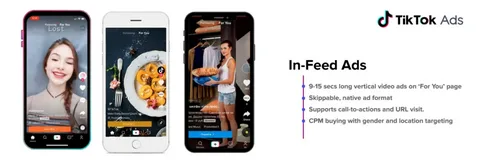
In-Feed Ads appear naturally within users’ content feeds. They resemble organic TikTok videos and often feel less intrusive.
Best For:
- Traffic campaigns
- Conversions
- Product promotion
- Lead generation
TopView Ads
TopView placements appear when users first open the app, providing immediate visibility.
Best For:
- Product launches
- Brand awareness
- Major campaigns
Spark Ads
Spark Ads allow brands to promote existing organic content rather than creating separate advertisements.
Best For:
- Social proof
- Authentic engagement
- Creator partnerships
Branded Hashtag Challenges
These campaigns encourage users to create content around a specific theme or challenge.
Best For:
- Community engagement
- User-generated content
- Viral campaigns
TikTok Ad Format Comparison
| Format | Visibility | Cost Level | Best Objective |
| In-Feed Ads | High | Moderate | Conversions |
| TopView | Very High | Higher | Awareness |
| Spark Ads | High | Moderate | Engagement |
| Hashtag Challenges | Very High | Higher | Participation |
Most advertisers begin with In-Feed Ads and Spark Ads before experimenting with larger campaign formats.
The Anatomy of a High-Converting TikTok Ad
Many marketers assume success depends on expensive equipment or advanced editing. In reality, strong TikTok ads usually follow a simple structure.
The platform rewards content that captures attention quickly and maintains engagement throughout the viewing experience.
Every successful ad begins with a compelling hook.
Elements of High-Performing TikTok Ads
1. Strong Opening Hook
The first few seconds determine whether viewers continue watching.
Examples include:
- Surprising statements
- Unexpected visuals
- Bold claims
- Interesting questions
- Product demonstrations
2. Clear Story Structure
Viewers should quickly understand:
- The problem
- The solution
- The outcome
3. Visual Movement
Static visuals often struggle on TikTok. Movement helps maintain attention.
4. Strong Call to Action
Every advertisement should clearly guide viewers toward the next step.
High-Converting Ad Formula
| Stage | Purpose |
| Hook | Capture attention |
| Problem | Create relevance |
| Solution | Introduce product |
| Proof | Build trust |
| CTA | Encourage action |
This structure appears repeatedly across many of TikTok’s most successful campaigns.
Creative Best Practices That Increase Performance
TikTok’s algorithm rewards engagement, which means creative quality often has a greater impact than targeting precision.
Brands frequently focus on audience settings while neglecting creative testing. This approach limits growth.
The strongest advertisers constantly test new concepts, formats, hooks, and storytelling approaches.
Creative Elements Worth Testing
- Opening hooks
- Video length
- Text overlays
- Captions
- Product demonstrations
- User-generated content
- Creator partnerships
- Voiceovers
Content Styles That Often Perform Well
| Content Style | Strength |
| Product Demo | Clear value communication |
| Customer Story | Builds trust |
| Educational Video | Delivers value |
| Before-and-After | Visual proof |
| Behind-the-Scenes | Humanizes the brand |
| Trend Adaptation | Increases relevance |
Testing multiple creative approaches typically produces better results than relying on a single advertisement.
Leveraging User-Generated Content for Better Results
One of TikTok’s greatest advantages is the effectiveness of user-generated content.
Consumers often trust real people more than brands. Content created by customers, creators, and influencers frequently feels more authentic and relatable.
This authenticity translates into stronger engagement and conversion rates.
Benefits of User-Generated Content
- Increased trust
- Improved engagement
- Lower production costs
- Stronger social proof
- Better audience connection
Sources of User-Generated Content
- Customer reviews
- Product testimonials
- Influencer partnerships
- Creator collaborations
- Community challenges
Brands that successfully integrate user-generated content often create campaigns that feel less like advertisements and more like recommendations.
TikTok Targeting Strategies That Actually Work
One of TikTok’s biggest strengths is its ability to identify interested users through behavior rather than relying solely on demographic information. This allows advertisers to reach highly relevant audiences even when targeting settings are relatively broad.
Many new advertisers make the mistake of narrowing their audience too aggressively. They assume that tighter targeting automatically leads to better results. In reality, TikTok’s algorithm often performs best when given enough flexibility to find potential customers on its own.
The platform continuously analyzes user behavior, engagement patterns, content preferences, and purchasing signals. A broader audience can sometimes outperform a highly restrictive one because the algorithm has more opportunities to learn and optimize.
Audience Types to Test
- Broad targeting
- Interest-based audiences
- Custom audiences
- Website visitors
- Customer lists
- Lookalike audiences
- Video engagement audiences
Recommended Audience Strategy
| Campaign Stage | Audience Type |
| Testing Phase | Broad targeting |
| Early Optimization | Interest-based |
| Scaling Phase | Lookalikes |
| Retargeting | Custom audiences |
| Retention | Existing customers |
Many successful advertisers begin broadly and narrow only after gathering sufficient performance data.
“The algorithm cannot find your ideal customer if you never give it room to search.”
Setting Up the TikTok Pixel Correctly
The TikTok Pixel is one of the most important tools available to advertisers. Without it, campaign optimization becomes significantly more difficult.
The Pixel tracks actions users take after clicking an advertisement. This information helps TikTok understand which users are most likely to complete valuable actions such as purchases, sign-ups, or lead submissions.
As more conversion data becomes available, campaign performance often improves because the algorithm gains a clearer understanding of successful customer behavior.
Actions the TikTok Pixel Can Track
- Page views
- Product views
- Add-to-cart actions
- Checkout starts
- Purchases
- Form submissions
- App installs
Benefits of Proper Pixel Setup
| Benefit | Impact |
| Better Optimization | Improved conversions |
| Audience Building | Stronger retargeting |
| Conversion Tracking | Clearer reporting |
| Smarter Bidding | Improved efficiency |
| Campaign Scaling | Faster growth |
Skipping Pixel implementation is like driving without a dashboard. You may move forward, but you’ll have very little visibility into performance.
Budgeting Your TikTok Campaigns Wisely
Many advertisers assume larger budgets automatically produce better results. While budget matters, allocation often matters more.
The goal during the early stages is not maximum reach. The goal is gathering reliable data.
Successful advertisers typically begin with testing campaigns, identify winning creatives, and then increase spending gradually. This reduces risk while improving efficiency.
Budget Allocation Framework
Testing Budget
Use smaller budgets to identify:
- Strong hooks
- Winning creatives
- Effective audiences
- High-performing offers
Scaling Budget
Increase spending only after confirming:
- Consistent conversions
- Stable performance
- Positive return on ad spend
- Reliable customer acquisition
Example Budget Distribution
| Campaign Type | Budget Allocation |
| Creative Testing | 40% |
| Audience Testing | 20% |
| Scaling Winners | 30% |
| Retargeting | 10% |
This structure helps advertisers learn quickly without exhausting resources.
Scaling Winning TikTok Campaigns
Finding a profitable campaign is exciting. Scaling it successfully is where many advertisers struggle.
Rapid budget increases can disrupt algorithm performance. A campaign generating strong results today may deteriorate tomorrow if spending changes too aggressively.
The most effective approach is usually gradual expansion.
Ways to Scale Campaigns
- Increase budgets slowly
- Duplicate successful ad sets
- Expand audience sizes
- Launch lookalike audiences
- Introduce new creatives
- Test additional placements
Signs a Campaign Is Ready to Scale
- Consistent conversion volume
- Stable acquisition costs
- Positive return on ad spend
- Strong engagement metrics
- Reliable click-through rates
Scaling Checklist
| Question | Yes/No |
| Is performance consistent? | |
| Is the Pixel collecting enough data? | |
| Are creatives still fresh? | |
| Are conversion costs stable? | |
| Is profitability maintained? |
Scaling should feel controlled rather than rushed.
Analytics: Metrics That Actually Matter
TikTok Ads Manager provides a large amount of performance data. The challenge is knowing which metrics deserve attention.
Many advertisers become distracted by vanity metrics that look impressive but contribute little to business growth.
A video generating millions of views means very little if it produces no revenue.
Key Metrics to Monitor
- Click-through rate (CTR)
- Cost per click (CPC)
- Cost per acquisition (CPA)
- Conversion rate
- Return on ad spend (ROAS)
- Engagement rate
- Video completion rate
Metric Prioritization
| Metric | Importance |
| ROAS | Very High |
| CPA | Very High |
| Conversion Rate | High |
| CTR | High |
| Engagement Rate | Medium |
| Impressions | Medium |
The best metric is the one most closely tied to your business objective.
Retargeting: Turning Interested Viewers Into Customers
Not everyone buys immediately after seeing an advertisement. In fact, most people do not.
Retargeting allows brands to reconnect with users who have already demonstrated interest. These audiences often convert at higher rates because familiarity and trust have already begun developing.
Retargeting campaigns frequently deliver some of the most efficient advertising results available.
Audiences Worth Retargeting
- Website visitors
- Product viewers
- Cart abandoners
- Video viewers
- Previous customers
- Lead form visitors
Effective Retargeting Messages
| Audience | Message Focus |
| Website Visitors | Reminder |
| Cart Abandoners | Incentive |
| Product Viewers | Benefits |
| Existing Customers | Upsells |
| Video Viewers | Social proof |
Retargeting helps maximize the value of traffic already generated.
Common TikTok Advertising Mistakes to Avoid
Many businesses struggle not because TikTok advertising is ineffective, but because they repeat the same mistakes.
Avoiding these errors can improve performance immediately.
Mistake #1: Treating TikTok Like Traditional Advertising
Users expect content, not commercials.
Mistake #2: Ignoring Creative Testing
One ad rarely reveals what works best.
Mistake #3: Over-Targeting
Restrictive audiences can limit algorithm performance.
Mistake #4: Scaling Too Quickly
Rapid changes often disrupt campaign stability.
Mistake #5: Focusing Only on Views
Business results matter more than vanity metrics.
Quick Campaign Audit
- Is the hook strong?
- Does the content feel native?
- Is the call to action clear?
- Is tracking configured properly?
- Are multiple creatives being tested?
Small adjustments often create substantial improvements.
Advanced TikTok Growth Tactics Used by Top Brands
The most successful TikTok advertisers rarely depend on a single campaign. They build systems that continuously generate new content, test ideas, and scale winning concepts.
Growth becomes more predictable when experimentation becomes part of the process.
Advanced Strategies
- Creator partnerships
- Spark Ads amplification
- Influencer whitelisting
- Content repurposing
- Sequential retargeting
- Community-driven campaigns
- Trend adaptation
Growth Framework
| Stage | Focus |
| Discovery | Content testing |
| Validation | Performance analysis |
| Optimization | Refinement |
| Scaling | Budget expansion |
| Expansion | New audiences |
Brands that consistently test and learn often outperform competitors with significantly larger budgets.
Frequently Asked Questions
1. Are TikTok ads effective for small businesses?
Yes. TikTok’s algorithm allows smaller businesses to reach large audiences without requiring massive advertising budgets.
2. How much should I spend on TikTok ads initially?
Start with a testing budget that allows multiple creatives and audience combinations. Gathering data is more important than spending aggressively at the beginning.
3. What type of TikTok ad performs best?
There is no universal winner, but Spark Ads and authentic user-generated content frequently deliver strong engagement and conversion rates.
4. How long should TikTok ads be?
Many successful ads fall between 15 and 45 seconds, though performance depends more on engagement and storytelling than length alone.
5. Do I need influencers to succeed on TikTok?
No. Influencers can help accelerate growth, but many brands achieve strong results using in-house content, customer testimonials, and product demonstrations.
Conclusion:
TikTok advertising offers brands a unique opportunity to reach highly engaged audiences through content that feels authentic, entertaining, and valuable. The businesses achieving the strongest results are not necessarily spending the most money. They are creating compelling creative assets, understanding audience behavior, testing continuously, and allowing data to guide decisions. When strategy, creativity, and optimization work together, TikTok can become one of the most powerful growth channels available to modern marketers.
Call to Action
Review your current advertising strategy and identify where TikTok could complement your existing marketing efforts. Start with a clear objective, create content designed for the platform rather than adapted from other channels, and commit to testing multiple creative approaches. The insights you gain may reveal growth opportunities that traditional advertising platforms can no longer deliver at the same scale or efficiency.