
Business leaders have access to more data than ever before. Sales teams track customer interactions across multiple channels. Marketing departments monitor campaign performance in real time. Service teams collect feedback from thousands of support conversations. Finance departments generate reports covering every aspect of organizational performance.
The challenge is not collecting information. The challenge is turning that information into decisions.
Many organizations invest heavily in data collection only to discover that employees spend countless hours searching for insights hidden inside dashboards, spreadsheets, and reports. Valuable opportunities are often missed because teams cannot identify patterns quickly enough or because critical information never reaches decision-makers at the right moment.
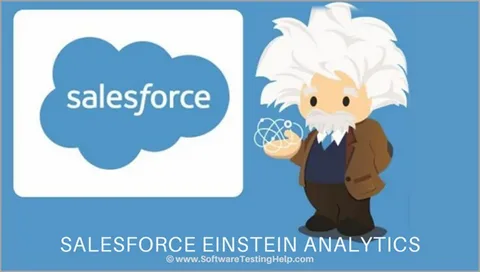
This is where artificial intelligence is beginning to change how businesses operate. Instead of relying entirely on manual analysis, organizations are increasingly using AI-powered systems to identify trends, predict outcomes, recommend actions, and surface insights automatically. One of the most influential platforms in this space is Salesforce Einstein, the artificial intelligence layer integrated throughout the Salesforce ecosystem.
Unlike standalone AI tools that require separate implementation, Salesforce Einstein embeds intelligence directly into workflows that sales, marketing, customer service, and leadership teams already use every day. The goal is not simply to provide more data. The goal is to help businesses make faster, smarter, and more confident decisions.
Understanding how Salesforce Einstein achieves this reveals why artificial intelligence is becoming an increasingly important component of modern business strategy.
What Is Salesforce Einstein?
Salesforce Einstein is an artificial intelligence platform built directly into the Salesforce ecosystem.
Rather than functioning as a separate application, Einstein works across Salesforce products to analyze data, identify patterns, generate predictions, and recommend actions. It helps users make better decisions without requiring advanced data science expertise.
The platform combines machine learning, predictive analytics, automation, natural language processing, and generative AI capabilities to assist employees throughout the customer lifecycle.
Its value comes from integration. Because Einstein operates within systems already containing customer, sales, marketing, and service data, it can generate insights based on real business activity rather than isolated datasets.
Core Einstein Capabilities
- Predictive analytics
- Opportunity scoring
- Lead scoring
- Forecasting
- Customer insights
- Workflow automation
- AI-generated content
- Conversational assistance
Business Areas Supported
| Department | Einstein Use Cases |
| Sales | Lead prioritization |
| Marketing | Campaign optimization |
| Customer Service | Faster issue resolution |
| Operations | Workflow automation |
| Leadership | Predictive forecasting |
| Commerce | Personalization |
“The most valuable business insight is often not the one you discover. It is the one you would have missed without assistance.”
That principle sits at the center of Salesforce Einstein’s purpose.
Why Traditional Decision-Making Often Falls Short
Most organizations still make many decisions using historical reports and manual analysis.
While reporting remains important, it has limitations. Reports generally describe what happened. They do not always explain why it happened or what is likely to happen next.
As businesses become more complex, relying exclusively on human analysis becomes increasingly difficult.
Decision-makers frequently face challenges such as:
- Too much data
- Delayed reporting
- Information silos
- Human bias
- Limited forecasting accuracy
- Inconsistent analysis
Even highly skilled teams struggle when information volume exceeds their ability to process it effectively.
Common Decision-Making Challenges
| Challenge | Business Impact |
| Data overload | Slower decisions |
| Missed trends | Lost opportunities |
| Poor forecasting | Revenue uncertainty |
| Manual analysis | Reduced productivity |
| Inconsistent insights | Decision quality issues |
Artificial intelligence helps address these challenges by identifying meaningful signals hidden within large datasets.
How Einstein Improves Sales Decision-Making
Sales teams often operate under constant pressure.
Representatives must identify promising opportunities, prioritize outreach efforts, manage pipelines, forecast revenue, and close deals efficiently. Every decision influences performance.
Einstein helps sales professionals focus attention where it matters most.
Rather than treating every lead equally, the platform analyzes historical customer behavior and engagement patterns to identify which opportunities are most likely to convert.
Einstein Sales Capabilities
- Lead scoring
- Opportunity scoring
- Pipeline analysis
- Revenue forecasting
- Activity recommendations
- Sales insights
Example Sales Workflow
Without AI:
- Sales representative reviews dozens of leads.
- Prioritization relies on judgment.
- High-value opportunities may be overlooked.
With Einstein:
- Leads receive predictive scores.
- Top opportunities are highlighted.
- Sales teams focus on likely buyers.
Sales Benefits
| Benefit | Impact |
| Better prioritization | Higher conversions |
| Faster decisions | Increased productivity |
| Stronger forecasting | Better planning |
| Improved focus | More revenue opportunities |
For many sales teams, prioritization improvements alone create measurable performance gains.
Lead Scoring: Finding the Best Opportunities Faster
Lead scoring has traditionally required extensive manual effort.
Marketing and sales teams often define rules based on demographics, website activity, content downloads, and engagement levels. While useful, these systems can become outdated quickly as customer behavior changes.
Einstein takes a more dynamic approach.
Machine learning models analyze historical conversion patterns and continuously evaluate which lead characteristics correlate most strongly with successful outcomes.
The result is a more accurate assessment of lead quality.
Traditional Lead Scoring vs Einstein Lead Scoring
| Factor | Traditional Method | Einstein |
| Setup | Manual | Automated |
| Adaptability | Limited | Continuous |
| Accuracy | Moderate | High |
| Maintenance | Ongoing | Reduced |
| Scalability | Moderate | High |
Why Lead Scoring Matters
- Better sales productivity
- Reduced wasted effort
- Faster response to qualified leads
- Improved conversion rates
- Stronger sales and marketing alignment
Businesses often discover that not all leads deserve equal attention, and Einstein helps identify the difference.
Predictive Forecasting: Looking Beyond Historical Reports
Forecasting influences many critical business decisions.
Hiring plans, budget allocations, inventory management, resource planning, and revenue expectations all depend on accurate predictions.
Traditional forecasting often relies heavily on historical performance and managerial judgment. While experience remains valuable, forecasting accuracy can suffer when market conditions change.
Einstein introduces predictive analytics into the forecasting process.
Instead of analyzing only past results, it evaluates patterns, customer behavior, pipeline activity, and historical outcomes to estimate future performance.
Areas Where Predictive Forecasting Helps
- Revenue planning
- Sales forecasting
- Demand prediction
- Resource allocation
- Territory planning
- Growth strategy
Forecasting Comparison
| Factor | Traditional Forecasting | Einstein Forecasting |
| Speed | Moderate | Fast |
| Pattern Detection | Human-driven | AI-assisted |
| Scalability | Limited | High |
| Data Analysis | Manual | Automated |
| Predictive Insights | Limited | Extensive |
The goal is not to eliminate human judgment but to improve decision quality through stronger data-driven insights.
Marketing Decisions Powered by AI
Marketing departments generate enormous amounts of data.
Campaign performance, audience engagement, email metrics, customer journeys, website behavior, and advertising results all provide valuable information. The challenge lies in determining which actions produce the strongest outcomes.
Einstein helps marketers move beyond simple reporting.
Instead of merely showing performance metrics, the platform can identify trends, recommend actions, and highlight opportunities that might otherwise remain hidden.
Marketing Applications
- Campaign optimization
- Audience segmentation
- Personalization
- Content recommendations
- Engagement analysis
- Performance prediction
Marketing Benefits
| Capability | Business Outcome |
| Better targeting | Higher conversions |
| Improved personalization | Greater engagement |
| Smarter segmentation | Better campaign performance |
| Predictive insights | Faster optimization |
Modern marketing increasingly depends on delivering the right message to the right audience at the right time. Einstein helps make that process more precise.
Personalization at Scale
Customers expect relevant experiences.
Generic marketing messages often struggle to generate engagement because consumers increasingly expect businesses to understand their preferences, behaviors, and interests.
Creating personalized experiences manually becomes difficult as customer databases grow.
Einstein helps automate personalization by analyzing customer data and recommending content, products, offers, and messaging tailored to individual users.
Personalization Examples
- Product recommendations
- Personalized emails
- Dynamic website content
- Customer journey adjustments
- Targeted promotions
Benefits of AI Personalization
| Benefit | Result |
| More relevance | Better engagement |
| Higher conversions | Increased revenue |
| Improved customer experience | Stronger loyalty |
| Better retention | Long-term growth |
Businesses capable of delivering relevant experiences consistently often gain meaningful competitive advantages.
Customer Service Decisions Become More Intelligent
Customer service teams frequently operate in high-pressure environments.
Representatives must respond quickly, resolve issues efficiently, and maintain customer satisfaction while managing large volumes of requests.
Einstein helps support teams by surfacing relevant information, recommending solutions, and identifying cases that may require additional attention.
Customer Service Applications
- Case classification
- Issue prioritization
- Recommended responses
- Knowledge suggestions
- Sentiment analysis
- Escalation prediction
Service Team Benefits
| Capability | Outcome |
| Faster resolution | Better customer satisfaction |
| Automated recommendations | Greater efficiency |
| Improved prioritization | Reduced delays |
| Better insights | Stronger support quality |
Customer expectations continue rising, making intelligent support systems increasingly valuable.
Einstein Copilot and the Rise of Generative AI
One of the most significant developments within the Salesforce ecosystem is the introduction of Einstein Copilot, which brings generative AI directly into business workflows.
Earlier generations of business AI focused primarily on prediction and analysis. They could identify trends, score leads, or forecast outcomes. Generative AI expands those capabilities by helping employees create content, summarize information, answer questions, and perform tasks through natural language interactions.
Instead of searching through dashboards or manually reviewing records, users can ask questions and receive relevant responses based on organizational data.
Examples of Einstein Copilot Tasks
- Summarizing customer accounts
- Drafting sales emails
- Generating service responses
- Creating meeting summaries
- Recommending next actions
- Retrieving customer insights
How Copilot Changes Decision-Making
| Traditional Process | Einstein Copilot Process |
| Search for data manually | Ask a question |
| Review multiple reports | Receive summarized insights |
| Draft responses manually | Generate first drafts |
| Analyze records individually | Receive contextual recommendations |
The value is not simply speed. It is reducing the friction between information and action.
“The faster employees can access meaningful insights, the faster organizations can respond to opportunities and challenges.”
Executive Decision-Making Becomes More Data Driven
Leadership teams often face decisions involving uncertainty.
Revenue projections, expansion plans, hiring decisions, budget allocations, and strategic initiatives all require a balance between experience, judgment, and available data.
Einstein helps executives gain broader visibility into business performance by identifying trends that might otherwise remain hidden.
Instead of relying solely on periodic reports, leaders can access continuously updated insights generated from operational data.
Executive Use Cases
- Revenue forecasting
- Pipeline analysis
- Customer retention monitoring
- Market opportunity identification
- Operational performance tracking
- Resource allocation planning
Leadership Benefits
| Capability | Strategic Value |
| Predictive forecasting | Better planning |
| Trend identification | Faster action |
| Automated insights | Improved visibility |
| Risk detection | Smarter decisions |
| Opportunity discovery | Growth potential |
Organizations increasingly view AI not as a replacement for leadership judgment but as an enhancement to it.
Workflow Automation Reduces Decision Delays
Business decisions often stall because employees spend time gathering information, routing approvals, updating systems, and coordinating tasks.
These delays may seem minor individually, but they accumulate across departments and processes.
Einstein supports automation by helping organizations identify repetitive activities and streamline workflows.
When routine decisions can be handled automatically, employees gain more time for strategic work.
Common Automation Areas
- Lead routing
- Case assignment
- Approval processes
- Follow-up activities
- Data updates
- Customer communications
Example Workflow
Without Automation
- Lead enters system.
- Employee reviews information.
- Lead is assigned manually.
- Follow-up task is created.
- Notification is sent.
With Einstein Automation
- Lead enters system.
- Einstein evaluates lead quality.
- Appropriate representative receives assignment.
- Follow-up process begins automatically.
Automation Benefits
| Benefit | Business Outcome |
| Faster execution | Better responsiveness |
| Fewer manual tasks | Higher productivity |
| Consistent processes | Reduced errors |
| Better scalability | Growth support |
Automation often improves both efficiency and decision quality.
Turning Data Into Actionable Intelligence
Many organizations already possess valuable data.
The problem is that data alone does not create business value. Insights emerge only when information becomes understandable and actionable.
Einstein focuses on transforming raw data into recommendations.
Rather than presenting endless charts and metrics, the platform attempts to answer practical questions such as:
- Which leads deserve attention?
- Which opportunities are most likely to close?
- Which customers are at risk?
- Which campaigns need adjustment?
- Which service cases require escalation?
Data vs Intelligence
| Raw Data | Actionable Intelligence |
| Website visits | High-intent prospects identified |
| Email opens | Engagement trends explained |
| Pipeline records | Revenue risk highlighted |
| Service tickets | Escalation recommendations provided |
This shift from observation to recommendation is one of the most important aspects of modern business AI.
Real-World Business Applications
The practical value of Salesforce Einstein becomes easier to understand when viewed through everyday business scenarios.
Different departments often use the same AI platform in entirely different ways while benefiting from a shared data foundation.
Sales Team Example
A sales manager overseeing hundreds of opportunities uses Einstein scoring to identify deals most likely to close this quarter. Representatives prioritize those opportunities, improving forecast accuracy and conversion rates.
Marketing Team Example
A marketing department analyzes campaign performance through Einstein recommendations. Underperforming audience segments are identified quickly, allowing budgets to be adjusted before significant resources are wasted.
Customer Service Example
Support representatives receive suggested responses and relevant knowledge articles, reducing resolution times and improving customer satisfaction.
Operations Example
Workflow automation reduces administrative effort associated with routine tasks, allowing employees to focus on higher-value initiatives.
Business Impact Overview
| Department | Primary Benefit |
| Sales | Better prioritization |
| Marketing | Smarter optimization |
| Service | Faster resolutions |
| Operations | Greater efficiency |
| Leadership | Better forecasting |
The cumulative effect across departments can be substantial.
Limitations and Challenges Businesses Should Understand
Despite its capabilities, Salesforce Einstein is not a perfect solution.
Organizations sometimes assume that implementing AI automatically leads to better decisions. In reality, outcomes still depend heavily on data quality, business processes, and user adoption.
AI can amplify strengths, but it can also expose weaknesses.
Common Challenges
- Poor data quality
- Incomplete customer records
- Limited user adoption
- Unrealistic expectations
- Integration complexity
- Training requirements
Potential Limitations
| Limitation | Impact |
| Inaccurate data | Reduced prediction quality |
| Limited historical data | Less reliable insights |
| Complex implementation | Longer deployment |
| User resistance | Lower adoption |
Businesses achieve the strongest results when AI initiatives are paired with strong data governance and employee training.
Pros and Cons of Salesforce Einstein
Understanding both strengths and limitations helps organizations evaluate whether Einstein aligns with their goals.
Pros
- Strong predictive analytics
- Deep Salesforce integration
- Improved forecasting
- Better lead prioritization
- Workflow automation
- Generative AI capabilities
- Scalable across departments
Cons
- Dependence on data quality
- Learning curve for some users
- Potential implementation complexity
- Best value often realized within Salesforce ecosystem
- Advanced capabilities may require additional investment
Overall Evaluation
| Category | Rating |
| Predictive Analytics | 9.5/10 |
| Automation | 9/10 |
| Ease of Use | 8/10 |
| Business Impact | 9/10 |
| Scalability | 9.5/10 |
| Innovation | 9/10 |
For organizations already invested in Salesforce, Einstein often represents a natural extension of existing capabilities.
The Future of Salesforce Einstein
Artificial intelligence is evolving rapidly, and Salesforce continues expanding Einstein’s role throughout its platform.
Future developments are likely to focus on deeper automation, more advanced conversational AI, stronger predictive capabilities, and increasingly personalized recommendations.
The long-term trend is clear. Businesses want systems that not only provide information but also assist with decision-making and execution.
Emerging Areas of Growth
- Generative AI
- Conversational interfaces
- Real-time recommendations
- Autonomous workflows
- Advanced forecasting
- Personalized customer experiences
Future Business Impact
| Trend | Expected Outcome |
| Better AI assistants | Faster decisions |
| More automation | Greater efficiency |
| Improved predictions | Stronger planning |
| Enhanced personalization | Better customer relationships |
Organizations adopting AI effectively today may be better positioned to compete in increasingly data-driven markets.
Final Verdict: Does Salesforce Einstein Truly Transform Business Decisions?
The short answer is yes, but not because it replaces human judgment.
Salesforce Einstein transforms decision-making by helping organizations process information more effectively, identify opportunities faster, prioritize resources more intelligently, and act on insights with greater confidence.
Its greatest strength lies in integration. Because it operates within systems already used by sales, marketing, service, and leadership teams, Einstein can deliver insights where decisions actually happen rather than forcing employees to switch between separate analytical tools.
Final Scorecard
| Category | Score |
| Predictive Intelligence | 9.5/10 |
| Automation | 9/10 |
| Sales Impact | 9.5/10 |
| Marketing Impact | 9/10 |
| Customer Service Impact | 9/10 |
| Executive Visibility | 9/10 |
| Overall Rating | 9.2/10 |
Businesses that combine quality data, strong processes, and AI-driven insights often gain advantages in speed, efficiency, and decision quality. Salesforce Einstein helps make that combination more achievable.
Frequently Asked Questions
1. What is Salesforce Einstein used for?
Salesforce Einstein is used for predictive analytics, lead scoring, forecasting, workflow automation, customer insights, and generative AI assistance across Salesforce products.
2. Does Salesforce Einstein require data science expertise?
No. Einstein is designed to provide AI-powered insights without requiring users to build machine learning models themselves.
3. Can Einstein improve sales forecasting?
Yes. Einstein analyzes historical and current data to help improve forecast accuracy and identify potential revenue risks or opportunities.
4. What is Einstein Copilot?
Einstein Copilot is Salesforce’s generative AI assistant that helps users retrieve information, generate content, summarize records, and perform tasks using natural language.
5. Is Salesforce Einstein only useful for sales teams?
No. Marketing, customer service, operations, and executive leadership teams can all benefit from Einstein’s predictive and automation capabilities.
Conclusion:
Salesforce Einstein represents a significant shift in how organizations approach decision-making. Rather than forcing employees to manually analyze growing volumes of data, the platform helps surface insights, predict outcomes, automate routine activities, and guide action across departments. While success still depends on quality data and effective implementation, Einstein demonstrates how artificial intelligence can enhance business judgment by making information more accessible, relevant, and actionable.
Call to Action
Evaluate how your organization currently makes decisions and identify areas where employees spend excessive time gathering information, prioritizing tasks, or analyzing performance data. The opportunities for AI-driven improvement often exist within everyday workflows, and understanding those bottlenecks is the first step toward building a smarter, more responsive business.